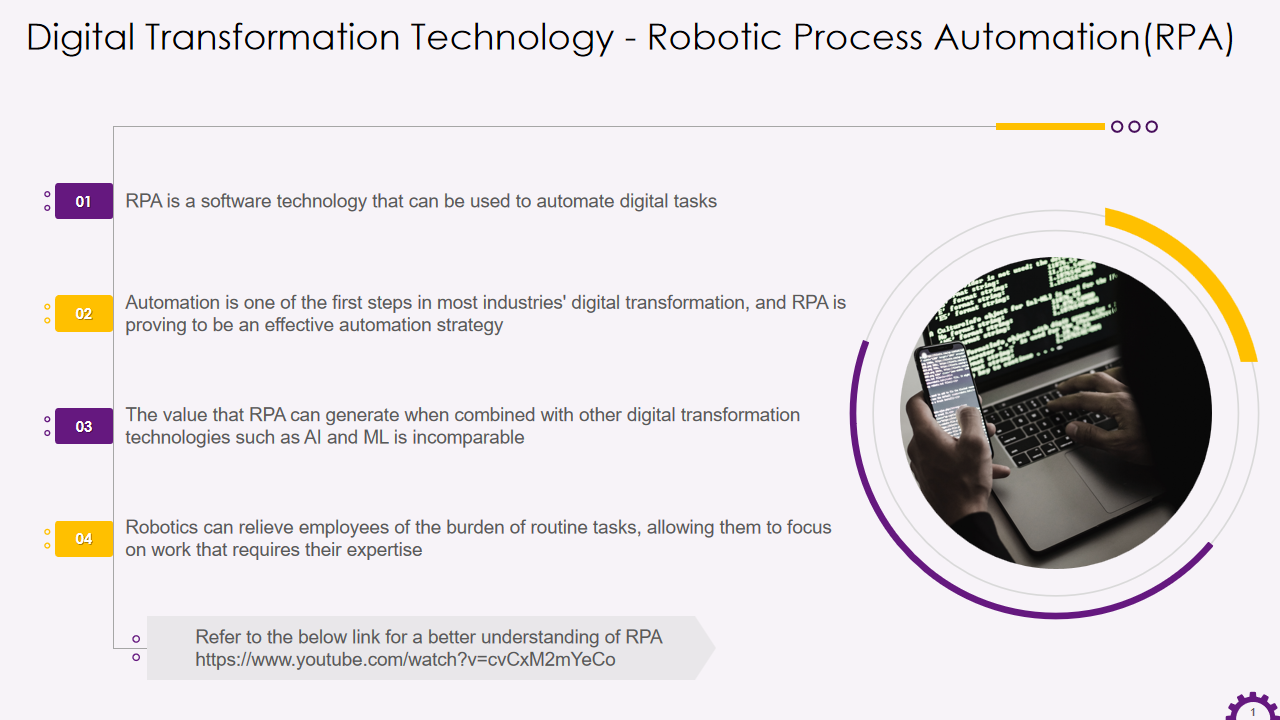
The Evolution of Automation: How Robotic Process Automation Is Transforming Businesses in the USA

The Impact of Robotic Process Automation on American Business
Robotic Process Automation (RPA) stands at the forefront of a technological revolution that redefines operational strategies within American businesses. With the rapidly evolving nature of the marketplace, organizations are increasingly turning to RPA to streamline and enhance their operations. This approach not only fosters a more efficient workplace but also empowers employees to concentrate on strategic initiatives that drive growth and innovation.
Businesses across various sectors have begun to grasp the transformative potential of RPA. Below are several key benefits that illustrate this transformation:
- Increased Efficiency: Automation minimizes the possibility of human error and accelerates workflows, ensuring tasks are completed accurately and swiftly. For example, automating data entry in accounting can reduce processing time significantly.
- Cost Savings: By adopting RPA, organizations can drastically lower labor costs while enhancing productivity. Studies indicate that companies can achieve up to a 30% cost reduction after implementing RPA solutions.
- Scalability: RPA systems provide the flexibility to adjust to the changing needs of a business. This scalability is particularly beneficial during peak seasons, allowing companies to temporarily increase workforce capacity without additional hiring.
Furthermore, diverse industries are leveraging RPA to enhance operational efficiencies. In finance, banks utilize automation for routine activities such as transaction processing and compliance reporting, ensuring adherence to regulatory requirements while freeing up staff to focus on customer service. Healthcare organizations have also embraced RPA; for instance, automating scheduling and billing tasks allows healthcare providers to dedicate more time to patient-centric activities, ultimately improving patient care and satisfaction.
As we examine the broader implications of RPA, it becomes evident that this technology is not only altering the way businesses operate within the United States but is also redefining the very fabric of the workplace. The automation of mundane tasks enhances job satisfaction and fuels employee engagement as professionals are allowed to pursue more meaningful work.

In conclusion, as we further explore the multifaceted impacts of RPA, it’s imperative to recognize that this technology is shaping the future of work itself. It inspires a new perspective on productivity and innovation, encouraging businesses to rethink the roles of their employees in a rapidly changing digital landscape. The adoption of RPA presents a compelling narrative about progress—one that could transform not only companies but entire industries across America.
DISCOVER MORE: Click here to learn about the impact of automation
Unlocking New Efficiencies: The Role of RPA in Business Operations
As businesses in the USA navigate an increasingly competitive landscape, the adoption of Robotic Process Automation (RPA) serves as a catalyst for unlocking new efficiencies and optimizing resource allocation. By offloading repetitive, rule-based tasks to software robots, companies can streamline their operations, resulting in substantial improvements to both productivity and employee satisfaction. The significance of RPA goes beyond mere task execution; it is fundamentally changing how organizations approach their strategic goals.
RPA has made remarkable inroads into various industries, demonstrating its versatility and effectiveness. Here are some key applications and impacts of RPA in American businesses:
- Customer Service Enhancement: Businesses are utilizing RPA to automate customer interactions, from handling inquiries to processing orders. For instance, chatbots powered by RPA can manage thousands of customer queries simultaneously, reducing response times and improving customer experiences.
- Data Management: The automation of data extraction, validation, and reporting processes allows organizations to maintain accurate and up-to-date records. In sectors such as banking and insurance, RPA can facilitate faster claims processing and transaction tracking while ensuring compliance with regulatory frameworks.
- Human Resources Optimization: RPA is transforming HR departments by automating tasks like employee onboarding, payroll processing, and benefits administration. This allows HR professionals to focus more on talent development and employee engagement initiatives.
The trend of utilizing RPA has not only been embraced by large enterprises but is also making waves among small and medium-sized businesses (SMBs) across the nation. According to recent studies, nearly 60% of SMBs in the USA are planning to adopt RPA within the next two years. This shift indicates a growing recognition that automation is not just a luxury for major corporations but an essential tool for competing in today’s fast-paced economy.
However, the transition to an automated framework is not without its challenges. Businesses must navigate concerns regarding data security, employee displacement, and the integration of RPA within existing technologies. Addressing these issues requires a careful and strategic approach to ensure that the adoption of RPA aligns with overall business goals and workplace culture.
Despite the challenges, the momentum towards RPA integration is undeniable. Businesses that embrace this technology not only gain immediate advantages in efficiency and cost savings but also position themselves for long-term growth and adaptability. As we delve deeper into the landscape of RPA, it becomes clear that its influence will only continue to expand, driving organizations towards a future where automation is seamlessly intertwined with everyday operations.
The Future of Robotic Process Automation
As Robotic Process Automation (RPA) continues to evolve, businesses in the USA are witnessing a revolution in operational efficiency and productivity. RPA tools are not just automating mundane tasks; they are enabling companies to rethink their entire workflow. By integrating RPA with advanced technologies such as Artificial Intelligence (AI) and Machine Learning (ML), organizations are uncovering opportunities to enhance decision-making processes and innovation.The application of RPA in sectors like finance, healthcare, and customer service demonstrates its versatility. In finance, RPA can streamline the processing of transactions, reduce manual errors, and increase compliance adherence. Similarly, in healthcare, automation of administrative tasks allows medical professionals to focus on patient care rather than paperwork. The ability of RPA to adapt to various industries is pivotal, and the technology is drawing interest from stakeholders keen on securing a competitive edge in their markets.Moreover, the scalability of RPA solutions allows businesses to easily adjust their operations to meet fluctuating demands. Organizations can quickly deploy RPA robots to handle spikes in workloads without the overhead costs associated with hiring additional staff. This flexibility is particularly valuable in times of economic uncertainty or shifts in consumer behavior, making RPA a reliable solution for maintaining efficiency.The implementation of RPA also leads to improved data accuracy. Automated processes significantly reduce the likelihood of human error, which can be detrimental, especially in fields like finance and healthcare where precision is critical. This accuracy fosters a more trustworthy environment for both company operations and customer relations.Businesses should keep an eye on upcoming trends in RPA. With the advances in cognitive automation, future RPA systems may possess self-learning and predictive capabilities, further transforming operational strategies. As organizations leverage these advanced functionalities, the potential for enhancing customer experiences and operational capabilities will likely multiply. Investing in RPA today ensures that companies not only stay ahead of the curve but also prepare for a future where automation plays a crucial role in every facet of business. Embracing this evolution could be the deciding factor for those looking to thrive in a highly competitive marketplace.
| Category 1 | Category 2 |
|---|---|
| Efficiency Improvements | Automated tasks result in faster execution and reduced cycle times. |
| Cost Reductions | Significantly lower operational costs through reduced manpower and error corrections. |
DISCOVER MORE: Click here to learn about data quality’s pivotal role
Accelerating Innovation: The Strategic Advantages of RPA Adoption
In addition to improving operational efficiency, Robotic Process Automation (RPA) is increasingly being recognized for its role in driving innovation within American businesses. By liberating employees from mundane tasks, organizations are creating more room for creative problem-solving and strategic thinking, thereby fostering a culture of innovation.
One of the most significant trends in RPA adoption is its integration with other advanced technologies. For example, businesses are combining RPA with Artificial Intelligence (AI) and Machine Learning (ML) to enhance decision-making processes. This synergy enables organizations to not only automate basic tasks but also analyze data patterns and predict future outcomes. In industries such as healthcare, RPA tools can automate patient scheduling, while AI algorithms predict patient flow, ultimately improving service delivery and patient outcomes.
Moreover, RPA is facilitating rapid scalability for companies. As market demands fluctuate, organizations can quickly adjust their operations without overhauling entire systems. A study by Deloitte reported that companies that implemented RPA solutions experienced an increase in operational agility, allowing them to respond swiftly to changes in customer demands or market conditions. This flexibility is particularly critical for businesses navigating the uncertainties of economic fluctuations, as it empowers them to remain competitive.
- Cost Reduction: RPA not only saves time but also reduces labor costs significantly. A joint report from Automation Anywhere and the Everest Group found that businesses deploying RPA typically reduce operational costs by 25-50%. Savings realized through automation can be reinvested into innovation-driven projects or expansion initiatives.
- Improved Compliance: Accuracy and compliance are paramount, particularly in regulated industries. RPA helps ensure that processes adhere to compliance standards, minimizing the risk of human error. By maintaining consistent documentation and processes, businesses can protect themselves from costly penalties and enhance their credibility with regulators.
- Better Employee Morale: By automating repetitive tasks, RPA can lead to higher job satisfaction among employees. They are more inclined to tackle complex challenges, which fosters a more positive work environment. A survey conducted by UiPath revealed that 93% of employees feel more engaged when their employers implement automation solutions.
As the technological landscape continues to evolve, the potential applications of RPA appear boundless. For instance, manufacturers are increasingly utilizing RPA to optimize supply chain operations, ensuring the timely delivery of materials and reducing downtime in production lines. Similarly, retailers leverage RPA for inventory management, automating stock-level monitoring to enhance supply chain efficiency and customer satisfaction.
However, the successful implementation of RPA is predicated on effective change management strategies. Training employees to adapt to new technologies and continuously evaluating systems for improvements is crucial for maximizing RPA’s potential. Organizations that invest in upskilling their workforce not only mitigate the fear of job displacement but also empower their employees to harness the full benefits of automation.
In this age of digital transformation, RPA stands out as a key driver of operational innovation. As companies increasingly recognize that automation is not just about cutting costs but is also a strategic enabler for innovation, we can expect the trends in RPA adoption to gain even more momentum in the years to come.
DISCOVER MORE: Click here to dive deeper into the future of robotic process automation
Conclusion: Embracing the Future of Robotic Process Automation
The journey of Robotic Process Automation (RPA) in transforming American businesses is a testament to the power of innovation in the digital age. As organizations harness the capabilities of RPA, they are not merely automating tasks but are also reshaping the very fabric of their operations to foster a culture of agility, creativity, and strategic foresight. The integration of RPA with Artificial Intelligence (AI) and Machine Learning (ML) further amplifies its impact, enabling data-driven insights that enhance operational efficiency and customer satisfaction.
With significant cost reductions, improved compliance, and heightened employee morale, RPA stands as a vital component of modern business strategy in the United States. Companies are increasingly realizing that automation is not a threat but an opportunity to redirect human talent towards more meaningful and complex challenges. Notably, industries ranging from healthcare to retail are leveraging RPA to streamline processes and drive growth, illustrating its ubiquitous relevance across sectors.
As we look to the future, the challenge lies in harnessing the full potential of RPA while managing the transition effectively. Organizations that prioritize training and upskilling will cultivate a workforce that is not only adaptable to technological advancements but also poised to lead the charge in innovation. Ultimately, the evolution of automation through RPA is not just about enhancing productivity; it’s about redefining what is possible for businesses in the USA, positioning them for sustained success in an increasingly competitive landscape.

Linda Carter
Linda Carter is a writer and artificial intelligence enthusiast specializing in AI tools, emerging technologies, and digital innovation. With extensive experience helping individuals understand and apply artificial intelligence in practical ways, Linda shares her knowledge on our platform. Her goal is to empower readers with useful insights, inspiring ideas, and step-by-step guidance for navigating the evolving world of AI with confidence.