
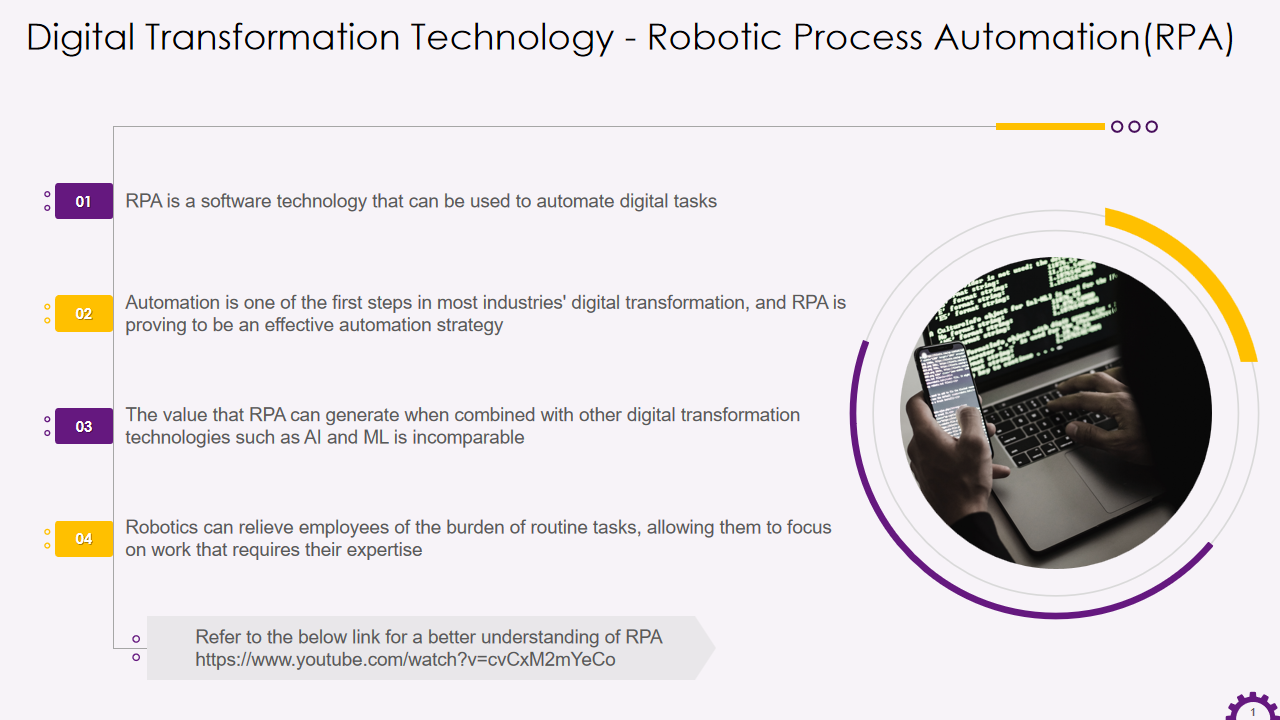
The Evolution and Impact of Robotic Process Automation
As businesses strive for increased efficiency and accuracy, the role of Robotic Process Automation (RPA) becomes increasingly crucial. This transformative technology has the ability to streamline repetitive tasks and free up human employees for more strategic roles. However, misconceptions continue to circulate surrounding RPA, which can hinder its implementation and integration into everyday business processes.
Common Myths:
- One prevailing myth is that RPA will replace human jobs entirely. Many fear that automation means the end of employment for numerous roles. However, studies show that RPA is designed to assist rather than eliminate. By automating mundane tasks, employees can focus on higher-level responsibilities, fostering innovation and creative thinking within teams.
- Another misconception is that implementing RPA is too costly for small businesses. Initial investments might seem daunting; however, RPA implementations can vary in scale and cost, with several vendors offering tiered solutions that cater to businesses of different sizes. In fact, many small businesses have successfully adopted RPA, often finding that the long-term savings far outweigh the upfront costs.
- Lastly, there’s a belief that RPA is only suitable for large enterprises. This is not accurate. Industries ranging from healthcare to retail have seen significant enhancements from RPA, demonstrating its versatility and applicability across various sectors.
Realities of RPA:
- In reality, RPA complements human work rather than replaces it. The technology excels in environments with repetitive tasks, such as data entry or invoice processing, which can lead to increased productivity and decreased error rates. By utilizing RPA, companies can harness the power of automation to create a more efficient workflow.
- Financial implications of RPA are also noteworthy. Initial costs can often be offset by the efficiencies gained over time. According to a report from Deloitte, organizations implementing RPA could see a return on investment (ROI) of up to 300% within the first year due to faster turnaround times and reduced operational costs.
- Furthermore, RPA is scalable and adaptable, making it an attractive option for businesses, regardless of their size. Small and medium-sized enterprises (SMEs) can take advantage of RPA’s flexibility to tailor solutions to their specific needs, thus fostering a competitive edge in their industries.
By breaking down these myths and embracing the realities of Robotic Process Automation, organizations in the United States can innovate and improve their operations. Understanding the nuances of RPA is not only beneficial but essential as businesses look for advanced solutions to remain competitive in today’s fast-paced world.
Join us as we delve deeper into the world of RPA, demystifying its complexities, debunking prevalent myths, and illustrating the significant benefits it offers to businesses across various sectors.
DISCOVER MORE: Click here to learn about the impact of automation
Understanding the Essentials of RPA: A Closer Look
To effectively navigate the complexities of Robotic Process Automation (RPA), it is crucial to grasp key concepts that underpin this technology, particularly its functionalities and intended applications. RPA is primarily designed to automate rule-based, repetitive tasks that require limited human judgment. This means that tasks which are standardized and frequently recurring, such as data extraction, report generation, and transaction processing, are prime candidates for automation.
Why RPA Matters
As organizations embrace RPA, they achieve operational efficiency and enhance the quality of their services. By automating mundane tasks, businesses are not just increasing speed but also significantly reducing error rates. In healthcare, for example, cognitive robots can handle patient data entry and management, allowing healthcare professionals to devote more time to patient care. In financial services, RPA is being employed to streamline audit processes and compliance checks, ensuring accurate and timely reporting.
Key Benefits of RPA Implementation
Implementing RPA offers an array of benefits that contribute to a business’s bottom line. Here are some of the most significant advantages:
- Increased Efficiency: RPA can automate processes that usually take hours or days, completing them in a fraction of the time. For businesses with high transaction volumes, this leads to remarkable time savings.
- Cost Reduction: By decreasing the time employees spend on mundane tasks, organizations can significantly reduce operational costs. Studies have shown that businesses implementing RPA can save anywhere from 20% to 50% in operational expenses over time.
- Enhanced Accuracy: RPA eliminates human errors associated with data entry and handling, ensuring consistent output quality and compliance with standards. This is particularly vital in industries such as finance and healthcare, where accuracy is paramount.
- Scalability: RPA solutions can easily be scaled up or down depending on a business’s needs. As customer demands fluctuate, organizations can quickly adapt their RPA capabilities, making them more resilient in dynamic market conditions.
Implementation Challenges
Despite the myriad advantages, businesses often encounter challenges during RPA implementation. Preliminary assessments may sometimes overlook critical aspects like process complexity, employee training, and change management. Ensuring that teams are equipped with the necessary skills to work alongside RPA technologies is vital for a smooth transition.
In conclusion, while Robotic Process Automation holds the potential to revolutionize business processes, understanding its true capabilities and managing expectations is crucial. By addressing myths and focusing on the realities of RPA, companies can leverage this technology to enhance efficiency, reduce costs, and foster innovation in their workflows. As organizations continue to seek ways to prosper in a competitive landscape, RPA emerges as a powerful tool that deserves thoughtful consideration and strategic implementation.
| Myth | Reality |
|---|---|
| RPA is only for large enterprises | RPA technology is scalable, making it accessible for businesses of all sizes. |
| Automation replaces human jobs | RPA complements human labor by handling repetitive tasks, allowing employees to focus on higher-value work. |
| RPA implementation is a one-time project | Successful RPA requires ongoing management and integration with evolving business processes. |
| RPA technology is difficult to integrate | Modern RPA tools are designed for easy integration with existing systems and workflows. |
In addressing misconceptions surrounding Robotic Process Automation, it’s essential to distinguish between myths and the underlying realities of its implementation. One prevalent myth is that RPA is exclusively for large enterprises. In contrast, RPA technology is remarkably scalable, making it a viable solution for organizations of any size. Another common assumption is that RPA will eliminate jobs, which overlooks the fact that RPA is designed to complement human abilities by managing repetitive tasks. This shift enables employees to pivot towards more strategic and impactful roles. Furthermore, some believe that automation is a one-off project; however, effective RPA requires continuous management and alignment with dynamic business processes to maintain efficiency and relevance.Lastly, concerns about integration challenges are unfounded as contemporary RPA solutions are engineered to integrate seamlessly with existing systems. As organizations continue to explore the potential of RPA, understanding these realities can drive informed discussions and strategic planning for digital transformation.
DISCOVER MORE: Click here to learn about anomaly detection in cybersecurity
Separating Fact from Fiction: Common Myths Surrounding RPA
As businesses embark on their RPA journeys, a series of misconceptions can cloud their understanding of this transformative technology. One prevalent myth is that RPA can fully replace human workers. In reality, the role of RPA in organizations is not to eliminate jobs but rather to augment human capabilities. A combination of RPA and human insight leads to enhanced productivity and job satisfaction among employees. By relieving staff of repetitive tasks, RPA allows them to focus on more strategic activities that require creativity and decision-making skills.
Myth 1: RPA is Only for Large Enterprises
Another common misconception is that Robotic Process Automation is exclusively the domain of large businesses. In truth, small to medium-sized enterprises (SMEs) stand to gain substantial benefits from RPA. According to recent studies, more than 75% of SMEs have begun to invest in RPA tools. With pilot programs and scalable solutions available, even smaller businesses can implement RPA to enhance operational efficiency. By embracing RPA, these organizations can level the playing field against larger competitors, thereby helping them to grow and innovate.
Myth 2: RPA Requires Significant IT Expertise
Many businesses are deterred from adopting RPA due to the belief that it necessitates advanced technical knowledge. While some familiarity with IT systems can be beneficial, many RPA tools are designed with user-friendliness in mind. No-code or low-code platforms allow business users, often referred to as “citizen developers,” to create automation solutions without deep technical expertise. This democratization of RPA enables a broader integration of automation across departments, leading to faster implementation and more substantial returns.
Myth 3: RPA is a One-Time Solution
Many organizations assume that implementing RPA is a one-off project, but this perception overlooks the need for continuous improvement. As business processes evolve, so do automation needs. RPA requires a commitment to ongoing evaluation and optimization. Companies should aim to routinely assess automated processes, identifying areas for enhancement, scalability, and innovation. Failure to view RPA as a long-term partnership may hinder the promised efficiencies and benefits of this powerful technology.
Realities of RPA Success: Measuring Impact and ROI
Understanding the realities of RPA involves recognizing its impact on both productivity and Return on Investment (ROI). According to the Institute for Robotic Process Automation and Artificial Intelligence (IRPA AI), organizations report an average ROI of around 300% within the first year of implementation. By measuring key performance indicators (KPIs) such as process cycle time, error rates, and resource allocations, businesses can tangibly assess the effectiveness of their RPA initiatives.
Moreover, the flexibility of RPA supports changing business goals, from enhancing customer satisfaction to adapting to new regulations. As industries face increasing pressure to innovate and optimize, RPA continues to prove itself as a critical component in driving strategic objectives.
Ultimately, addressing common myths about RPA is essential for organizations aiming to leverage automation effectively. By fostering a nuanced understanding of RPA’s capabilities, businesses can position themselves for seamless transitions and sustained growth in an increasingly automated world.
DIVE DEEPER: Click here to learn more
Conclusion: Embracing the Future with Robotic Process Automation
As we have explored throughout this article, the landscape of Robotic Process Automation (RPA) is rich with both opportunities and misconceptions. Dismantling these myths is crucial for organizations eager to harness the power of automation effectively. Understanding that RPA is not a job eliminator, but a catalyst for enhancing human roles, allows companies to reimagine their work processes. Furthermore, the accessibility of RPA tools empowers small and medium-sized enterprises to compete on a larger scale, leveling the playing field.
The notion that RPA demands extensive IT knowledge is fallacious, as today’s user-friendly platforms enable non-technical staff to create invaluable automation solutions. Moreover, it’s essential to recognize that RPA is not a one-time fix; it requires ongoing commitment to evolve with changing business dynamics and to seize potential enhancements. Companies that view RPA through this lens will be better positioned to experience its transformative effects and an average ROI of 300% within the first year.
In conclusion, as businesses seek to innovate and thrive in a rapidly advancing digital era, embracing RPA is not merely a technological decision but a strategic imperative. By dispelling common myths and embracing the realities of RPA implementation, organizations can pave their way toward increased efficiency, improved customer satisfaction, and sustained growth. The future of work is here, and it is spurred on by the intelligent integration of robotic process automation.


 Linda Carter