
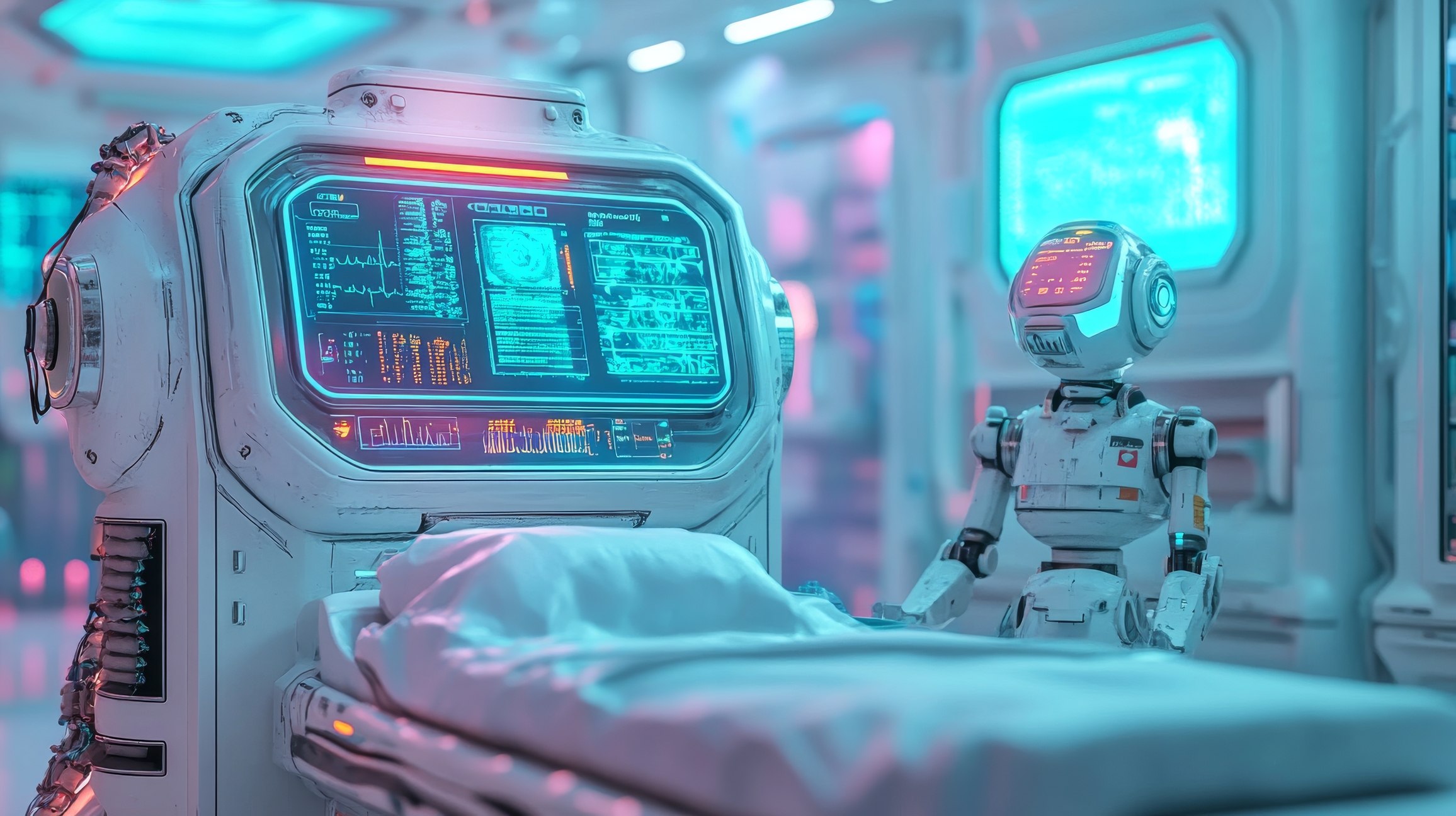
The Future of Medical Diagnosis is Here
The convergence of machine learning and healthcare is spearheading a transformative era in medical diagnosis. As we increasingly rely on complex algorithms, the promise of heightened accuracy and efficiency in disease identification becomes more tangible. The changes are not only theoretical; they are actively reshaping how healthcare providers diagnose and treat illnesses today.
Several key trends emerge in this evolving landscape, each with its unique potential to revolutionize patient care:
- Personalized Medicine: Utilizing machine learning, algorithms can decode vast amounts of genetic and phenotypic data. For instance, tools like IBM’s Watson can analyze a person’s genetic makeup alongside clinical data to recommend customized treatment plans for conditions such as breast cancer. This approach minimizes the one-size-fits-all method, increasing the likelihood of successful outcomes by addressing an individual’s specific needs.
- AI-Driven Diagnostics: Advanced technologies such as deep learning are making significant strides in image interpretation. For example, Google’s DeepMind has developed algorithms capable of detecting over 50 types of eye diseases by analyzing retinal scans. These systems enhance the capabilities of radiologists and pathologists, allowing for quicker and more accurate diagnoses.
- Predictive Analytics: Machine learning models leverage historical health data to forecast patient outcomes. For example, systems that analyze electronic health records can identify patients at high risk of developing chronic diseases like diabetes, prompting early interventions that may mitigate the disease’s progression.
These advancements in diagnostics facilitate timely disease identification, yielding better patient outcomes. Notably, early-stage cancers exhibit significantly improved prognosis when detected through advanced machine learning techniques. Furthermore, the implications extend to various chronic ailments, where predictive modeling can provide a roadmap for preventative care.
As healthcare institutions across the United States embrace these technologies, substantial enhancements in patient care are becoming increasingly evident. Hospitals and clinics are now investing in artificial intelligence tools, integrating them into their practices to streamline operations and improve patient experiences.
In the following sections, we will delve deeper into these emerging trends and uncover the innovative technologies poised to redefine medical diagnosis. Join us as we explore the exciting developments on the horizon and their profound impact on the world of healthcare.
Innovations in Machine Learning Transforming Healthcare
The healthcare landscape is witnessing an unprecedented shift powered by machine learning technologies. The promise of innovative diagnostic tools is on the rise, aiming to enhance patient care and streamline decision-making processes. Several burgeoning trends are not only improving accuracy but also paving the way for more proactive healthcare strategies. Here are some critical areas where machine learning is set to make a significant impact:
- Natural Language Processing (NLP): A subset of artificial intelligence, NLP is proving essential in deciphering unstructured clinical notes. By analyzing text data from physicians’ notes, discharge summaries, and other health documents, machine learning algorithms can synthesize critical insights and flag potential issues. For example, NLP technologies can identify patients needing urgent follow-ups, thereby improving continuity of care and ensuring timely interventions.
- Clinical Decision Support Systems (CDSS): These intelligent systems utilize machine learning to assist healthcare providers in making informed decisions about patient treatment plans. By analyzing past treatment outcomes and patient demographics, CDSS can recommend the most effective interventions for individual patients. This ability not only enhances clinical outcomes but also educates providers about emerging best practices.
- Remote Monitoring and Wearable Technology: As telehealth gains traction, machine learning is emerging as a driving force behind remote patient monitoring. Devices that track vital signs and health metrics generate vast amounts of data. Machine learning algorithms can analyze this real-time data to detect anomalies, facilitating timely responses. For instance, patients with chronic conditions like heart disease can be monitored continuously, allowing for prompt adjustments in their treatment plans.
These trends illustrate an exciting intersection between technology and healthcare, characterized by a shift from reactive to proactive medical practices. By leveraging machine learning, healthcare professionals can not only diagnose diseases earlier but also foresee potential health issues before they escalate. This foresight is particularly evident in chronic disease management, where timely interventions can notably decrease mortality rates and improve quality of life.
Furthermore, the integration of machine learning-driven diagnostics into clinical workflows can yield significant cost savings for healthcare providers. By optimizing resource allocation and reducing the occurrence of unnecessary procedures, hospitals can enhance efficiency while simultaneously delivering superior patient care. As organizations navigate the complexities of transitioning to AI-integrated systems, the outcomes promise to redefine traditional paradigms in diagnoses and treatment.
The transformation is not merely technological; it is grounded in a broader vision of patient-centered care. By placing patients at the core of medical decision-making and harnessing the power of data, healthcare providers are establishing the foundation for a more responsive and effective healthcare system. As we progress further into this realm of machine learning for medical diagnosis, the implications for patient outcomes, cost-efficiency, and healthcare access will continue to unfold.
In the subsequent sections, we will explore specific applications where machine learning is being utilized to tackle real-world challenges in medical diagnostics, showcasing the technologies that are leading this revolution.
Future Trends in Machine Learning for Medical Diagnosis
As technology evolves, the realm of medical diagnosis is experiencing a transformation led by machine learning innovations. From image recognition to predictive analytics, machine learning models are now at the forefront of improving patient outcomes. In this section, we delve deeper into specific trends that are reshaping diagnostic practices in the medical field.
| Category | Description |
|---|---|
| Remote Monitoring | Utilization of wearable devices to collect data that machine learning algorithms analyze, enabling early diagnosis. |
| Predictive Analytics | Employing historical data to forecast patient health trends, thus facilitating proactive healthcare interventions. |
The integration of remote monitoring through smart devices allows healthcare providers to gather real-time health data, essentially expanding the horizon of preventive medicine. This convergence enhances the ability to detect anomalies much sooner than traditional methods. Moreover, predictive analytics plays a crucial role by leveraging vast datasets. Algorithms can identify patterns that humans may overlook, ultimately influencing treatment decisions and improving accuracy. As the landscape of machine learning continues to evolve, staying abreast of these advancements will be crucial for both practitioners and patients alike. The future is promising, with advancements such as natural language processing (NLP) further bridging the gap between physician-patient communication and data interpretation, thus paving the way for more personalized care solutions. These trends showcase just a fraction of machine learning capabilities to revolutionize healthcare diagnostics, making it an exciting time to be involved in this field.
The Role of Predictive Analytics in Patient Outcomes
Building on the advancements already discussed, predictive analytics is another frontier where machine learning is making seismic waves in the realm of medical diagnosis. By analyzing large datasets that include patient records, demographics, and treatment outcomes, machine learning models can identify patterns that forecast patient health trajectories. These predictive models can inform clinicians about potential diseases even before symptoms manifest, enabling a shift from traditional diagnostic methods to more anticipatory healthcare approaches.
For instance, in cancer diagnostics, machine learning algorithms can analyze imaging studies and pathology reports to predict the likelihood of tumor malignancy. A recent study highlighted that algorithms trained on thousands of mammogram images achieved accuracy rates exceeding 90% in identifying abnormal findings compared to conventional methods. This accuracy not only saves time but can also significantly improve patient outcomes, as earlier detection leads to timely interventions. Furthermore, integrating genetic data into these models can enhance risk stratification, allowing tailored monitoring based on individual susceptibility.
Enhanced Imaging Techniques through Deep Learning
Deep learning, a subset of machine learning, is transforming medical imaging by enabling computers to interpret complex visual data with astonishing precision. By utilizing convolutional neural networks (CNNs), deep learning algorithms sift through images to identify anomalies, such as tumors or fractures, that may not be easily discernible to the human eye. This capability is especially invaluable in fields like radiology, where time is of the essence.
Additionally, organizations like the American College of Radiology are developing collaborative programs to create large-scale, annotated image databases that provide training grounds for these algorithms. Such initiatives can enhance the performance of machine learning models, ensuring they become even more reliable in various diagnostic scenarios. Moreover, the potential to combine imaging data with electronic health records can furnish healthcare providers with a comprehensive view of a patient’s health, facilitating holistic diagnostic approaches.
Ethical Implications and Data Integrity
While the potential for machine learning in medical diagnosis appears boundless, it necessitates a careful examination of ethical implications and data privacy. The utilization of vast amounts of patient data raises concerns about consent and privacy. Regulatory frameworks like the Health Insurance Portability and Accountability Act (HIPAA) in the United States are crucial for protecting patients’ sensitive information, yet they must adapt rapidly to accommodate new technologies.
Moreover, the risk of bias in machine learning models must not be overlooked. If the data used to train algorithms are not representative of diverse populations, the resulting diagnostic tools could perpetuate health disparities. Addressing these challenges will require ongoing collaboration between data scientists, healthcare professionals, and ethicists to ensure that machine learning tools operate equitably and transparently.
Future Prospects: Integrating Machine Learning within the Healthcare Ecosystem
As machine learning continues to evolve, the integration of these technologies into the broader healthcare ecosystem stands out as a pivotal trend. The synergy between electronic health records, telemedicine, and machine learning can create a seamless environment where diagnostic insights flow effortlessly from devices to clinicians. By harnessing real-time data analytics, healthcare providers can make smarter, data-driven decisions that are timely and tailored to the unique needs of each patient.
With these advancements on the horizon, the medical community is poised to enter an era where machine learning serves as a foundational pillar of medical diagnostics. As a result, patients may benefit from more personalized care pathways, improved health outcomes, and a healthcare system that increasingly prioritizes proactive management over reactive treatment.
Conclusion: Embracing the Machine Learning Revolution in Healthcare
As we stand at the intersection of technology and medicine, the future of machine learning in medical diagnosis holds transformative potential that extends beyond mere predictions and data analysis. With innovations in predictive analytics and the capabilities of deep learning, healthcare providers are not only equipped to identify diseases earlier but also to personalize treatment plans that cater to individual patient needs. The integration of these technologies can enhance the efficacy of diagnostics, fostering a healthcare environment that is responsive and anticipatory.
However, alongside these advancements, there is an urgent call for ethical vigilance. Ensuring that machine learning tools operate without bias while maintaining patient privacy is critical for building trust within healthcare systems. As we adopt these cutting-edge technologies, a collaborative effort involving clinicians, data scientists, and ethicists will be essential to navigate the complexities of patient data management and algorithmic fairness.
Looking ahead, the empowerment of healthcare through machine learning is a journey that promises to redefine patient care. As the tools become more sophisticated and widely deployed, the potential for significant improvements in patient outcomes becomes increasingly tangible. The commitment to create an equitable and efficient healthcare ecosystem will not only pave the way for better diagnostic practices but also establish a framework for future innovations. For patients, this heralds a new era where their care is truly informed, tailored, and proactive, paving the way to healthier lives.

 Linda Carter