

The Rise of Robotic Process Automation in Government
The advent of Robotic Process Automation (RPA) has sparked a revolution across various sectors, but its impacts are particularly pronounced within government services. As public sector agencies grapple with the mounting demands of constituents while working with constrained budgets, RPA presents a viable solution to modernize operations. By facilitating the automation of repetitive and mundane tasks, these technologies enable agencies to direct their human resources toward more strategic initiatives.
Enhanced Accuracy is one of the most significant benefits RPA brings to government processes. Human error is often a costly bane in public service operations; for instance, mistakes in data entry for applications can lead to delays and mismanagement of resources. By integrating RPA into these processes, agencies can ensure that data is processed accurately and consistently, thereby safeguarding the integrity of public records.
Another compelling reason for adoption is the cost savings associated with RPA. In tough economic times, government budgets are stretched thin, and agencies must find ways to do more with less. Implementing RPA can significantly reduce labor costs as software bots perform tasks that would typically require several human workers. The state of Massachusetts, for example, started leveraging RPA to automate certain aspects of its procurement processes, leading to notable financial savings and allowing staff to focus on higher-level strategic work.
The faster service delivery enabled by RPA cannot be overlooked. Citizens today have heightened expectations for timely service, and agencies must respond accordingly. By streamlining processes such as application approvals or license renewals, RPA can drastically reduce processing times. In Virginia, the Department of Motor Vehicles used RPA to expedite vehicle registration processes, successfully reducing the time required for approvals from several weeks to mere days.
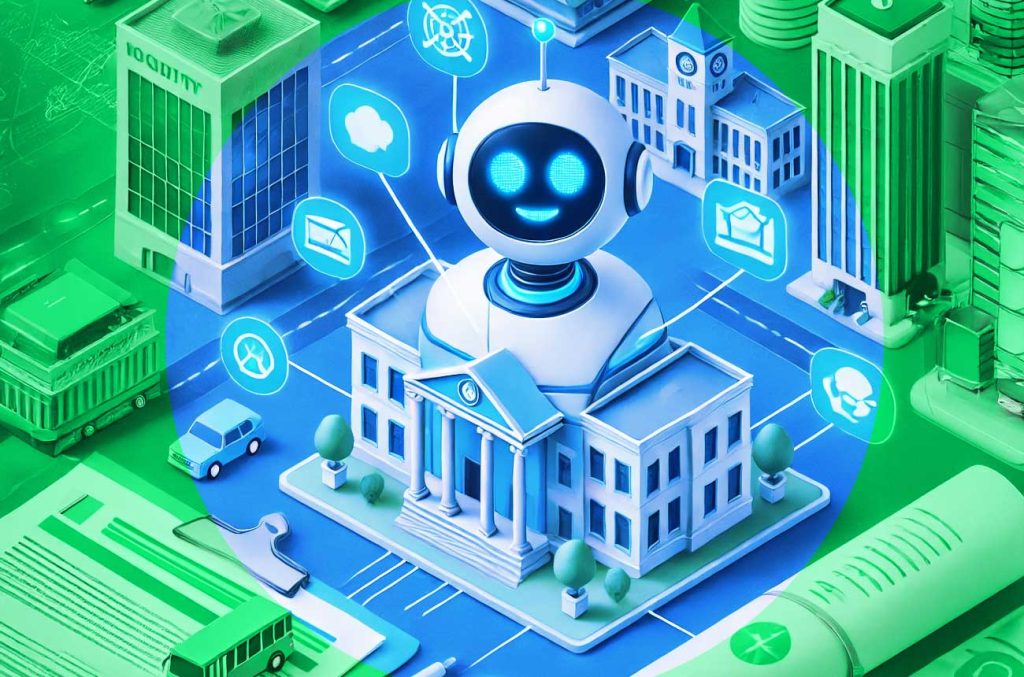
Moreover, when service delivery speeds up, the improved citizen experience becomes evident. RPA allows for more responsive and personalized services, as it frees up government employees from tedious tasks, enabling them to engage more meaningfully with the public. Imagine a scenario where a small business owner facing licensing hurdles receives timely support instead of enduring prolonged waiting times—a direct result of efficient automation.
While the potential for RPA in government services is undeniable, it is crucial to navigate the challenges that come with it. Issues such as data security, technology integration, and workforce displacement need careful consideration. Nonetheless, with thoughtful implementation strategies, Robotic Process Automation stands poised to redefine efficiency standards in public service, paving the way for a more responsive government structure capable of meeting the needs of the 21st century demographics.
DISCOVER MORE: Click here to learn about enhancing time series analysis
Transforming Public Sector Operations with RPA
As the public sector seeks innovative solutions to enhance operational efficiency, Robotic Process Automation (RPA) emerges as a game-changing tool. The widespread adoption of RPA is not merely a trend; it reflects a fundamental shift towards data-driven management and efficiency in government services. By automating routine tasks, government agencies can significantly improve their workflows and ultimately deliver better services to the public.
One of the sectors witnessing remarkable advancements due to RPA is healthcare services. Government agencies responsible for public health management are increasingly employing RPA to handle patient data processing, appointment scheduling, and insurance claims management. For instance, a recent implementation in a New York healthcare agency saw a reduction in patient intake processing time by over 40%, allowing healthcare workers to dedicate more time to patient care rather than administrative tasks.
Apart from healthcare, another area benefitting from RPA is social services. Agencies tasked with welfare, unemployment benefits, and food assistance programs are utilizing RPA to streamline applications and eligibility checks. By employing intelligent bots to gather and verify information, the California Department of Social Services has improved response times for applicants, leading to a more satisfied and less frustrated recipient base. This efficiency not only alleviates pressure from government workers but also fosters trust within the community.
In addition to enhancing accuracy and speed, RPA plays a crucial role in data analysis. Automated systems can swiftly compile and analyze large sets of data, providing decision-makers with real-time insights to inform policy and improve service delivery. This predictive capability can help agencies anticipate citizen needs, allowing for the proactive allocation of resources, especially during crises or natural disasters. For example, the Federal Emergency Management Agency (FEMA) has begun to implement RPA to analyze disaster response data, enabling quicker decision-making in emergencies.
To better understand the multi-faceted benefits brought by RPA, consider the following key advantages:
- Labor Efficiency: By enabling bots to take on repetitive tasks, government employees can allocate their skills towards more complex problems that require human insight.
- Scalability: RPA solutions can be easily scaled up or down based on changing needs, allowing agencies to adapt without significant overhauls of existing infrastructures.
- Compliance Assurance: Automated processes adhere strictly to regulatory guidelines, thus reducing risks associated with non-compliance and potential penalties.
- Continuous Improvement: RPA can adapt and improve through machine learning, identifying inefficiencies and optimizing workflows on an ongoing basis.
While the implementation of RPA illustrates a promising technology for the public sector, the transition is not without its challenges. Issues such as changing workforce dynamics, including potential job displacement, and the need for robust cybersecurity measures warrant careful examination. As government agencies embark on their digitization journeys, a balanced approach that embraces innovation while addressing potential risks will be essential for fully realizing the benefits of robotic process automation.
| Advantage | Description |
|---|---|
| Cost Efficiency | RPA reduces operational costs by automating repetitive tasks, freeing human resources for higher-value activities. |
| Improved Accuracy | With RPA, the likelihood of human error is minimized, leading to more reliable processes in government services. |
| Faster Service Delivery | Automating processes accelerates service delivery times, significantly enhancing public satisfaction. |
| Scalability | RPA systems can easily adapt to increasing workloads, ensuring consistent service levels during peak times. |
Investing in Robotic Process Automation enables government entities to streamline operations, thus improving citizen engagement through quicker and more accurate service offerings. By integrating RPA, not only can public departments enhance efficiency, but they can also redirect focus towards strategic initiatives. As the demand for effective governance continues to rise, the implementation of such technologies becomes essential. Organizations aiming to adapt to the digital era must explore RPA solutions to remain relevant and ensure that public services meet the modern citizen’s expectations. Through this shift, transparency and accountability within government operations can also be significantly improved, establishing a foundation for trust and reliability between administration and citizens.
DISCOVER MORE: Click here to learn about the challenges and opportunities of robotic process automation
Enhancing Citizen Engagement and Service Delivery with RPA
As governments increasingly recognize the value of enhancing citizen engagement, Robotic Process Automation (RPA) serves as an indispensable ally in building connections between agencies and the public. By automating responses to frequently asked questions and enabling more efficient handling of inquiries, RPA can transform the way citizens interact with government services. This level of engagement is vital, particularly in today’s digital-first environment where timely and informative communication is paramount.
A notable example of RPA improving citizen engagement can be observed in city municipalities adopting chatbots for their customer service operations. For instance, cities like Los Angeles have introduced AI-powered chatbots that leverage RPA to assist residents with a variety of queries regarding city services, such as permit applications or waste pickup schedules. These systems can handle thousands of interactions simultaneously, resulting in quicker response times and higher satisfaction rates among constituents.
Moreover, RPA can contribute to government transparency by automating the collection and dissemination of public records and data. The State of Ohio has utilized RPA to automate the release of Governor’s executive orders, streamlining the process of public access to information. Such transparency improves public trust in government operations, as citizens can easily access the information they have a right to know. Enhanced transparency not only supports informed citizen engagement but also encourages greater civic participation in government initiatives.
In addition to engaging citizens, RPA also optimizes the management of government workforce resources. By automating tedious manual processes such as payroll, documentation, and reporting, agencies can allocate staffing more effectively. The Florida Department of Revenue implemented RPA solutions to automate tax return processing, significantly reducing turnaround times and freeing up employees to focus on more value-added tasks. This not only enhances internal efficiency but also promotes higher morale among employees who are relieved from monotonous workflows.
The potential for RPA implementation in procurement processes has also gained traction among public sector agencies. By automating vendor selection, contract management, and invoice processing, government departments can streamline procurement workflows and cut down on administrative overheads. The City of New York has seen remarkable benefits from leveraging RPA in their procurement division, where it has led to a quicker onboarding process for vendors and improved compliance with procurement regulations.
Despite these advantages, certain challenges must be carefully navigated. Successful RPA implementation requires not only the right technology but also a strong commitment to change management. Government agencies must ensure that their workforce is adequately trained to work alongside automated systems, fostering a culture of collaboration and innovation. In addition, securing funding for RPA initiatives can be an obstacle, particularly in a tight budget environment often seen in public sector operations. In this context, providing a solid business case backed by data-driven results from trial implementations can support proposals for broader RPA rollouts.
The journey towards deploying RPA in public services is undoubtedly a complex one, marked by a series of strategic considerations. However, as more agencies venture into this innovative realm, the prospect of an enhanced, more efficient, and responsive public service delivery model becomes increasingly tangible. With ongoing advancements in RPA technology, the public sector is poised to become more adaptable, transparent, and ultimately, more effective in meeting the needs of its citizens.
DIVE DEEPER: Click here to learn more about the impact of convolutional neural networks
Conclusion: The Future of Public Services with RPA
In conclusion, Robotic Process Automation (RPA) stands as a transformative force within the public sector, driving significant advancements in operational efficiency and enhancing citizen services. As we have explored, RPA not only revolutionizes how government agencies interact with the public through improved engagement and service delivery but also optimizes internal processes that allow personnel to focus on higher-value tasks. From automating routine inquiries through chatbots in municipalities like Los Angeles to streamlining tax return processing within the Florida Department of Revenue, the evidence clearly demonstrates RPA’s potential to reshape public services.
Moreover, the enhancement of transparency through automated data dissemination, exemplified by the State of Ohio, reinforces public trust and encourages community participation in governance. While the journey towards RPA implementation poses certain challenges—such as ensuring proper training and managing change—these hurdles can be effectively overcome with strategic planning and commitment to innovation. As more governmental entities embrace this technology, they are not only responding to current demands but also setting the stage for a more agile and responsive future.
Ultimately, the ongoing advancements in RPA technology herald a new era for government services, positioning agencies to not only meet the needs of their constituents but to exceed them in ways previously deemed unattainable. As we move forward, continued exploration and investment in RPA will be essential for realizing its full potential in enhancing public sector efficiency and citizen engagement.


 Linda Carter