
Understanding the Impact of Automation on AI Data Processing
In the contemporary technological era, the growing reliance on automation has significantly reshaped how data is processed, particularly within the context of artificial intelligence (AI). With billions of gigabytes of data generated every day across various platforms—from social media posts to IoT devices—the urgency for efficient data processing systems has reached unprecedented levels.
The adoption of automated data processing frameworks offers transformative benefits that extend beyond mere speed and cost savings. For instance, consider the healthcare sector, where machine learning algorithms analyze patient data to identify health trends and predict disease outbreaks. Automated systems can process this data with remarkable efficiency, drastically cutting down the time healthcare professionals spend on mundane tasks, allowing them to focus on patient care.
Enhanced Efficiency Through Automation
Among the pivotal advantages of automation, enhanced speed stands out. Automated systems can manage vast datasets in mere seconds—operations that would take human analysts several hours or even days. For example, in financial services, stock market analysis relies heavily on real-time data processing. Automated trading systems evaluate market trends, executing trades within microseconds, far beyond human capabilities.
The second compelling benefit is improved accuracy. Automation significantly reduces human error, which is crucial in areas like data entry and financial reporting, where even minor mistakes can lead to substantial financial repercussions. A prime example can be found in fraud detection algorithms, where well-tuned automation can sift through transaction patterns to flag suspicious activities that human reviewers might miss.
Cost-Effectiveness and Practical Applications
Moreover, automation brings about cost-efficiency. The reduction or elimination of manual tasks translates into significant savings for companies, which can optimize their workflows and reallocate resources to strategic initiatives. Companies operating e-commerce platforms, such as Amazon, utilize advanced automation to streamline inventory management, ensuring that they can scale operations without proportionately increasing their workforce.
The applications of these automated systems are evident across various industries. Companies harnessing AI for predictive analytics can foresee market trends based on comprehensive data analyses, enabling them to make informed decisions swiftly. E-commerce giants, for instance, utilize this technology to tailor shopping experiences to individual customers, employing personalization tactics that enhance user engagement and boost sales.
Furthermore, sectors like banking employ automated systems for fraud detection, where algorithms analyze transaction data in real time, swiftly identifying anomalies that could indicate fraudulent activity. This capability not only protects organizations but also instills confidence in customers wary of electronic transactions.
The Future of Automation in Decision-Making
The future appears promising for automation and its role in AI-driven data processing. As organizations continue to innovate, the intersection of automation and AI is likely to evolve, fostering new methods that drive decision-making capabilities forward. Companies that effectively implement these technologies stand to gain a competitive edge in their respective industries.
In conclusion, the exploration of automation in data workflows unveils a realm of possibilities that not only enhance operational efficiency but also revolutionize how decisions are made across various sectors. As we move forward, staying abreast of these developments will be crucial for professionals and organizations seeking to navigate the complexities of modern data landscapes.
DISCOVER MORE: Click here to delve deeper
Streamlining Data Collection and Preparation
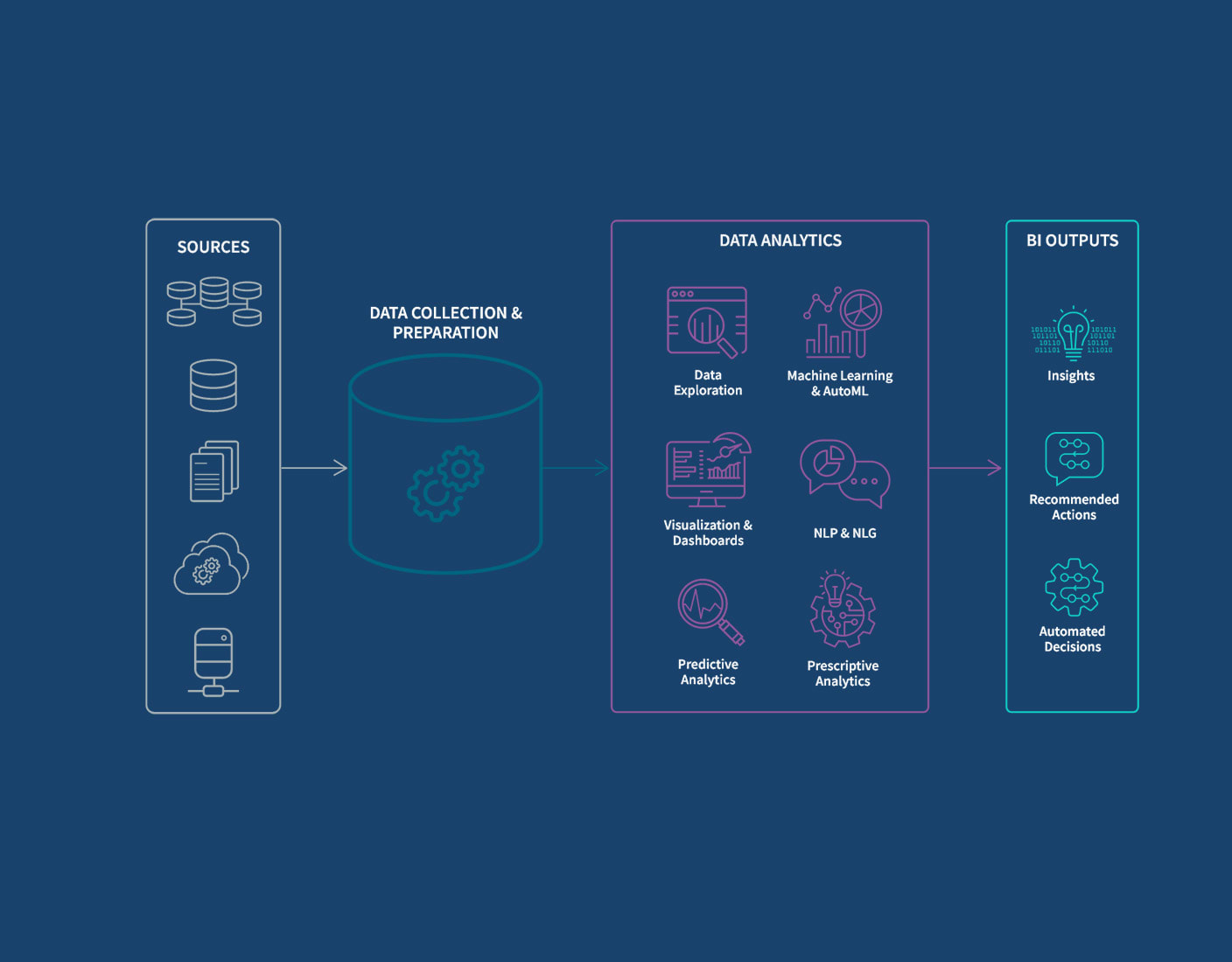
The foundational phase of any artificial intelligence system hinges on data collection and preparation. Effective automation plays a crucial role in this initial step by providing tools and processes that streamline how raw data is gathered, cleaned, and organized. Given that AI systems are only as good as the data they are fed, automating these processes ensures that high-quality, relevant information is processed efficiently.
A substantial portion of data collection is now automated, allowing organizations to capture vast amounts of information from various sources, including social media platforms, customer interactions, and sensor data from IoT devices. For instance, companies like Tesla rely on automated systems to gather real-time data from their vehicles, which helps improve their AI-driving algorithms. This constant influx of data not only ensures that the AI models are trained on the most up-to-date information but also allows for continuous learning and adaptation.
Moreover, automation enhances the data cleaning process—an essential aspect often overlooked. Data collected from multiple sources may be inconsistent or contain inaccuracies, which can skew AI outputs significantly. Automated data cleaning tools quickly identify and rectify these irregularities, something that would be labor-intensive for human analysts. This reduction in the need for manual intervention helps organizations maintain integrity in their datasets, leading to more accurate AI predictions.
Data Annotation: A Crucial Step
Another pivotal component of automated data processing is data annotation. AI models, particularly in machine learning, require labeled data to learn from and make predictions. Automation technologies can assist in efficiently annotating vast datasets, which would otherwise take human annotators extensive time and effort. In industries like healthcare, automated annotation tools can categorize medical images, distinguishing between healthy and unhealthy tissues—an operation that is vital for diagnostics and treatment planning.
Additionally, the integration of automated annotation tools does not merely accelerate the process but also ensures consistency across the boards. For example, when annotating thousands of images for facial recognition algorithms, automation can apply uniform tagging conventions that maintain the integrity of the dataset. This reduces the likelihood of bias or variances that may occur with manual processes.
The Power of Machine Learning in Automation
Machine learning also plays a significant role in enhancing automation within data processing. By leveraging algorithms that can learn from existing datasets, businesses can automate decision-making processes that are typically human-driven. For instance, in the retail sector, predictive analytics powered by machine learning models can forecast inventory needs more accurately. This not only resolves potential stock shortages but also ensures that businesses are not stuck with unnecessary overstock.
Ultimately, harnessing automation for data processing fundamentally transforms how organizations approach their AI projects. With the rapid advancements observed in automation technologies, entities can expect to see further enhancements in accuracy, efficiency, and overall productivity as they navigate this new technological landscape.
The Role of Automation in Data Processing for Artificial Intelligence
As businesses and research institutions increasingly turn to artificial intelligence (AI) to drive innovation and efficiency, the importance of automation in data processing cannot be overstated. Automation streamlines the handling of vast and complex datasets, allowing systems to quickly and accurately prepare information for AI algorithms. This efficiency enhances the performance of AI applications across various industries.
| Advantages of Automation | Impact on AI Data Processing |
|---|---|
| Increased Speed | Automation reduces the time needed to collect, clean, and prepare data, allowing AI models to be trained more rapidly. |
| Enhanced Accuracy | Automated processes minimize human error in data handling, leading to better quality inputs for AI systems, ultimately improving outcomes. |
Furthermore, automation equips data scientists and engineers with the necessary tools to focus on higher-value tasks instead of spending disproportionate amounts of time on repetitive data preprocessing. This paradigm shift not only optimizes resources but also leads to innovative approaches in developing machine learning algorithms.
As we explore further, it is crucial to understand the continual evolution of these automation tools and their implications on the future of AI technologies. Each advancement brings about new possibilities and challenges, paving the way for smarter, more responsive AI solutions capable of transforming sectors as diverse as healthcare, finance, and transportation.
DIVE DEEPER: Click here to discover more
Enhancing Model Training through Automation
Once data is collected and prepared, the next significant phase in the AI development lifecycle is model training. In this stage, automation plays an indispensable role in streamlining the processes that configure AI models to learn from the provided datasets. Advanced automation tools, powered by algorithms and frameworks, are capable of managing the entire trial-and-error aspect of model training efficiently, thereby enhancing speed and minimizing resource use.
In traditional settings, data scientists had to manually adjust hyperparameters, the underlying settings that determine how a model learns. However, with the advent of automated machine learning (AutoML) platforms, processes such as hyperparameter tuning can be optimized swiftly and precisely. For example, Google’s AutoML provides solutions that automate repetitive model-building tasks, allowing data scientists to focus on more complex, strategic decisions rather than tedious optimization cycles. This advancement not only accelerates the training timeline but also brings forth models that are better suited for their intended tasks.
The Role of Continuous Learning
Another dynamic aspect of automation in AI is its integration with continuous learning. As new data streams in, models must adapt to remain accurate and relevant. Automated retraining workflows ensure that AI systems are regularly updated with fresh information without necessitating excessive manual oversight. Companies like Netflix utilize continuous learning automated frameworks to adjust their recommendation algorithms based on real-time viewing habits, constantly refining and optimizing user experiences.
This approach significantly helps in maintaining performance over time. As factors influencing user behavior, market conditions, or other variables evolve, automated systems can seamlessly integrate these changes into ongoing model training cycles. This adaptability can be crucial, particularly in fast-paced environments such as e-commerce and digital advertising, where shifts in consumer trends can occur virtually overnight.
Scalability and Resource Allocation
Automation also empowers organizations to scale their AI capabilities effectively. By streamlining data ingestion, cleaning, annotation, and training processes, firms can handle exponentially larger data sets than ever before, which is vital in a world increasingly driven by big data. This scalability translates into a more varied and rich set of training materials, enabling models to learn from diverse contexts and scenarios.
Moreover, automating data processing workflows allows businesses to better allocate human resources. When data collection, preparation, and model training are conducted automatically, data scientists and engineers can redirect their expertise toward innovation, research, and high-value tasks that require critical thinking, creativity, and domain knowledge. This not only elevates the overall performance of AI initiatives but also fosters a culture of innovation within organizations, as teams are freed to tackle complex challenges and explore new opportunities.
Embracing Automation Ethically
As the role of automation in data processing for AI expands, it is essential for organizations to consider the ethical implications of their advancements. Automated processes must be transparent, reliable, and governed by standards that ensure data integrity and protect individual privacy. AI ethics committees and regulatory frameworks could provide guidelines for deploying automated tools responsibly, thereby building public trust in AI systems and their applications.
In summary, the growing reliance on automation in data processing not only revolutionizes the AI landscape but also sets a new standard for how organizations engage with data-driven technologies. By automating key processes within the lifecycle of AI model development, companies can enhance efficiency, innovation, and accuracy—all while maintaining ethical standards in their technological pursuits.
DIVE DEEPER: Click here to discover more
Conclusion
The evolving landscape of artificial intelligence (AI) is increasingly intertwined with automation in data processing, fundamentally reshaping how organizations manage and utilize data. From enhancing model training to embracing continuous learning, automation not only expedites processes but also improves the accuracy and relevance of AI models. The integration of automated systems streamlines workflows, enabling businesses to handle larger datasets and focus their human talent on innovative projects rather than repetitive tasks.
Moreover, the adoption of automation equips companies with the agility necessary to adapt to rapid market changes. The ability to retrain models automatically in response to new data ensures that AI systems remain effective and responsive to user needs, which is critical in fast-moving industries such as e-commerce or media streaming.
However, as the reliance on automated processes grows, it becomes paramount for organizations to address the ethical implications inherent in AI development. Transparency and data integrity must never be compromised, and ethical frameworks should guide the use of automation, thus promoting public trust in AI applications.
In essence, while the role of automation in data processing for AI offers remarkable opportunities, it also prompts a reflection on the responsibility that accompanies such technological advancements. Stakeholders must harness these tools wisely, fostering not only efficiency and innovation but also a commitment to ethical practices that ensure the long-term sustainability of AI systems. By doing so, they can navigate the fine line between technological progress and societal impact, ultimately paving the way for a future where AI serves as a powerful ally in driving positive change.


 Linda Carter